Navigation Horizontal | Navigation Vertical / Unternavigation | Direkt zum Inhalt
 
Header

Inhalt:

2011-11-22 New Head of Sales at Hellma Analytics

2011-11-22 New Head of Sales at Hellma Analytics

Markus Riegger Markus Riegger - Head of Sales at Hellma Analytics

Müllheim, 22. November 2011. Markus Riegger has officially assumed the position of Head of Sales at Hellma Analytics with effect from November. His predecessor Karl-Ernst Kaiser retired after 45 years with the company. Markus Riegger has already more than 20 years of sales experience with well known measurement and medical technology companies. Markus Riegger, a qualified industrial engineer developed extensive industry and marketing expertise – both in Germany as well as worldwide. His key duties will include the organisation and further development of the sales structure. In addition, he is also responsible for the conception, planning and realisation of sales activities.
“With our product portfolio and services we are a reliable and skilled partner for all spectrophotometer manufacturers. In addition to this, we will become even more productive in the future due to the current expansion of production and innovative products,” commented Markus Riegger.
In his position as Head of Sales, Markus Riegger is responsible for positioning the company, as well as its 11 subsidiaries and five product ranges, with manufacturers, laboratory dealers and end users. The company’s market lead should also be developed further and international market penetration increased. To help realise this, Markus Riegger has a team of 23 marketing, sales and logistics specialists.

Download image (310.85 kB)
back

2011-09-19 Hellma Group reaches finals of "Entrepreneur Of The Year 2011"

2011-09-19 Hellma Group reaches finals of "Entrepreneur Of The Year 2011"

Lutz_Mayer_Hellma_Analytics.jpg Lutz Mayer, CEO Hellma Group

Müllheim, 19. September 2011 – Impressive growth figures, a high degree of innovative strength and social commitment. For the fifteenth time, auditors and consultants Ernst & Young have voted the best mid-sized companies in Germany. After a strict selection procedure of several rounds, 65 companies out of 300 nominees have managed to get into the final of the contest “Entrepreneur of 2011” including also the Hellma Group from Müllheim. “I’m very pleased about this success to which each individual Hellma employee has actively contributed,“ said Lutz Mayer, Managing Director of the Hellma Group, about the company reaching the final.

With its challenging criteria and high-ranking jury, the entrepreneur prize has achieved considerable standing for already many years. The 65 finalists are characterised by their exceptional innovative strength which is thanks to the great dedication of their qualified and highly motivated employees. Furthermore, they also have effective organisational structures with short decision-making paths which enable them to respond flexibly to changing market conditions. On 23. September a winner will be chosen from each of the five categories – Industry, Trade, Services, Information and Communication Technology / Media and Start-up – and announced and honoured at the Alte Oper Frankfurt in front of illustrious guests.

Innovation as the key to success

The companies in the final also have considerable growth figures and represent all important sectors. They achieve an average turnover of 86 million euros a year and employ an average of 500 employees. In 2010 they recruited 2,600 new staff. In 2010 the Hellma Group acquired the calcium fluoride production from Schott Lithotec in Jena. According to own company information, the Hellma Group increased its turnover in 2010 by 56 per cent as well as employee number by 19 per cent to 360 employees.

An important success factor of this year’s finalists is also their ability to quickly respond to changing market conditions with innovative products and services. They invest above average sums in innovations which enables them to quickly bring new developments onto the market and challenge growing consolidation in many sectors. According to the entrepreneurs, this successful realisation of innovations is thanks to their qualified and committed employees. Hereby the training and further training of employees plays a decisive role. The full list of the 65 finalists can be seen on www.entrepreneur-des-jahres.de

Download image (2.71 MB)
back

2011-09-12 Hellma Optics – on a steady course of expansion for 20 years

2011-09-12 Hellma Optics – on a steady course of expansion for 20 years

Hellma_Optics_Firmenbild.tif Hellma Optics is celebrating its 20-year anniversary

The success story began 20 years ago as a spin-off of Jenoptik Carl Zeiss GmbH. The emerging company Hellma Optik GmbH started with 20 employees and supplied its first customers with precision optics and cells. Since then, several things have changed. In 1997, the relocation into the specially constructed building in Jena took place. The number of employees had meanwhile risen to 24, as well as the number of customers. The production area was approx. 1,000 m2. Hellma Optics responded to the dynamic requirements of the most important target sectors laser technology and photonics with constant capacity expansions and continuous growth. Today, 75 people are employed – they ensure Hellma Optics’s success with their high degree of experience. As a specialized manufacturer of cylinder, toric and flat optics of highest quality, Hellma Optics produces according to individual requests. “Business is getting more and more international. By now, renowned customers all over the world appreciate the high level of specialisation and quality and have confidence in the high-precision optics from our company” Ulf Hallmeyer, Managing Director of Hellma Optics, says. In 1998, he took over from his father and will now strategically develop the company further. Well-directed process optimisation, modern technology standards and continuous education and advanced training guarantee high product quality. Consistent innovation and substantial investments create new jobs and ensure economic success.

In 2010, the company generated a turnover of € 8.2m. For 2011 and 2012, a turnover of € 10m will be estimated. Hellma Optics is also supported by the competence of the Hellma Group regarding highest precision in glass, quartz glass and calcium fluoride. Hellma Materials in Jena and Hellma Analytics in Müllheim also belong to the Hellma Group. Altogether, more than 350 employees work for the Hellma Group. In 2011, the Hellma Group will generate an overall turnover of more than € 40 million. It has its own subsidiaries in 13 countries and representations in over 50 other countries.

Download image (630.54 kB)
back

2011-09-02 Process Analysis in the Chemical Industry

2011-09-02 Process Analysis in the Chemical Industry

Hellma_Mini_Prozess_Sonde.tif

FT-NIR Spectroscopy as PAT

PAT has already been used in practice in the automobile industry for many years: A 100 % process validation and control system as the basis for process quality control and cost effectiveness. In the meantime, it is no different in the chemical industry. It is just that here the processes are not large open production lines, but are often sited within difficult to access processing tanks, sometimes under extremely high pressure and temperature conditions and often using aggressive media. Classical testing methods, operating procedures, or general tools for process control cannot always be used.
The control of processes has to take place at a molecular level; therefore use of modern Process Analytical Technology (PAT), e.g. using FT-NIR spectroscopy, is necessary. This allows for much greater production efficiency within many industries and production with a more constant quality.

FT-NIR spectroscopy is ideally suited for the direct monitoring of chemical reactions, as well as the quality assurance of intermediate and final products in chemical production plants. Modern analytical techniques can be used in all phases of production. Thus, it is possible to transmit information about single processes over long distances directly from a process tank or bypass using quartz fibre optics. The information can be evaluated at a distance from the process, away from extreme ambient conditions, such as high pressures or temperatures.

So that the information can be constantly evaluated in real time, immersion probes or measuring cells are used, which are designed to work reliably under extreme conditions. Different materials can be used for the immersion probes, depending on the chemical composition of the process. Many different materials are available, including various grades of stainless steel, robust Hastelloy alloys, or even extremely resistant tantalum.
The optical materials used in immersion probes and measuring cells can also be adapted to match the process. Quartz and sapphire excel by their ultra-high degree of precision. Sapphire, in particular, is frequently selected by customers because of its chemical resistance. The required immersion probe or measuring cell can be selected via a modular design principle and simply adapted to the individual process conditions prevailing on site.

Frequently used application areas for FT-NIR spectroscopy with immersion probes and measuring cells:
▪ Quality assurance: intermediates or final products are checked for purity, e.g. water content etc.
▪ Process monitoring: the material composition of intermediates and final products can be determined quantitatively
▪ Understanding of reactions: new processes can be monitored analytically in real time during the development phase
▪ Goods received inspections: delivered goods or products, for example, can be identified by their NIR spectra (fingerprint), in order to avoid faulty filling of storage tanks or material mix-ups
In addition to chemical production, these areas of application can also be found in the plastics and polymer industry, the food industry and many other industries.

A very frequent application in the pharmaceutical industry is the determination of the cloud point in the development of active substances for pharmaceuticals. In order to achieve the next phase of approval, active substances have to undergo various tests. An important test is the determination of the cloud point according to temperature. Normally, conventional turbidity measurements are used. As soon as a certain temperature is reached, the active substance begins to crystallise and the turbidity increases.
This is a constant process, in which the turbidity increases only gradually. It is very difficult to determine exactly at which temperature the cloud point is reached. By using an immersion probe coupled to a spectrophotometer it is possible to determine very exactly the temperature of the turbidity point in a simple and accurate way. At the very start of crystallisation, the absorption spectrum of the solution changes significantly. This abrupt and easily visible change in the optical spectrum allows very accurate monitoring of this process to be made.

Author
Hannes Ebding, Dipl.-Ing. (FH), Product Manager
Fibre optic systems at Hellma Analytics

back

2011-06-21 PTFE probe measures the concentration of etching bath fluids in real time

2011-06-21 PTFE probe measures the concentration of etching bath fluids in real time

661.2310_Image.tif The PTFE probe for online process control makes complex sampling redundant

Müllheim, June 2011. During manufacturing, wafers run through a number of chemical processes. Here, substances are used that are partially corrosive and hazardous for humans, e.g. hydrofluoric acid, nitric acid, hydrochloric acid, hydrogen peroxide and many more. These substances are needed amongst others for specific cleaning processes in baths.

To be able to fulfil necessary high quality requirements when manufacturing solar panels, the particular baths have to be kept as stable as possible. Continuous monitoring of the bath composition is required for this and if necessary an adjustment to the composition. So far, this inspection has been carried out by manual sampling followed by a spectroscopic analysis.

Now a new option has emerged, measuring the composition of the ingredients with a fibre-optic probe. The significant advantage is fast online measurement of the parameters. This solution realized by Hellma Analytics makes complex sampling redundant. Besides the gain in speed, the process security is increased considerably because users are no longer endangered by exposure to corrosive liquids and the manufacturing process runs with a consistent high quality. Another advantage is the exact light path which guarantees measurement results that are optimally reproducible. Thus, frequent recalibration is no longer required. The probe is connected to the spectrophotometer via fibre optic cables so the concentration of the fluids can be tested in real time and adjusted quickly when necessary.

The special operating conditions in aggressive fluids present a major challenge to a standard probe’s material. In Hellma’s PTFE probe, the use of Teflon® (PTFE) as probe barrel material and the use of sapphire for optical components will guarantee consistency at any time. This is particularly interesting for manufacturers or users of etching baths as well as other producers using process analysis techniques.

Download image (1.7 MB)
back

2011-06-06 Extension to the existing building at Hellma Analytics

2011-06-06 Extension to the existing building at Hellma Analytics

On June 6th, after one year of planning, construction work for the annexe at Hellma Analytics has started. In recent years, the company has grown continuously and is in need of more space urgently. General planner for the additional building is Zeller | Eisenberg architects, who also realised the new entrance area in 2007. The new building will have a gross floor space of approx. 1,600 m2 and will house besides a new production line, our dispatch department. The amount invested will be € 4.8m and also includes the latest machinery, up-to-date environmental techniques as well as a special clean room area. “This annexe allows us to considerably improve the workflow in our manufacturing and logistics processes. Hence we will make ourselves fit to face the future and effectively invest in our global competitive capacity,“ says Lutz Mayer, Managing Director of Hellma Analytics. The architectural peculiarity is the utilities management centre which will be located above the middle of the building, a structure shaped like a trough. This will guarantee maximum flexibility with regard to the running of cables now and in years to come.

A simple use of shape combined with pure lines represents the building’s design concept. Few but high quality materials have been used. Thus the new structure blends in harmonically with the existing building. “Hellma products stand for precision and high tech; this is to be reflected in the building’s style,“ announced Holm Kändler, Hellma Analytics’ Technical Director and responsible project manager. The move into the newly built plant is scheduled in one year’s time. In 2012, Hellma Analytics will solemnise its 90th anniversary. This will be celebrated with an open day, where it will be possible to visit the premises.

Donwload PR (663.7 kB)
back

2011-04-08 Online monitoring of the cloud point in the development of pharmaceutical ingredients

2011-04-08 Online monitoring of the cloud point in the development of pharmaceutical ingredients

Hellma_Mini_Prozess_Sonde.tif

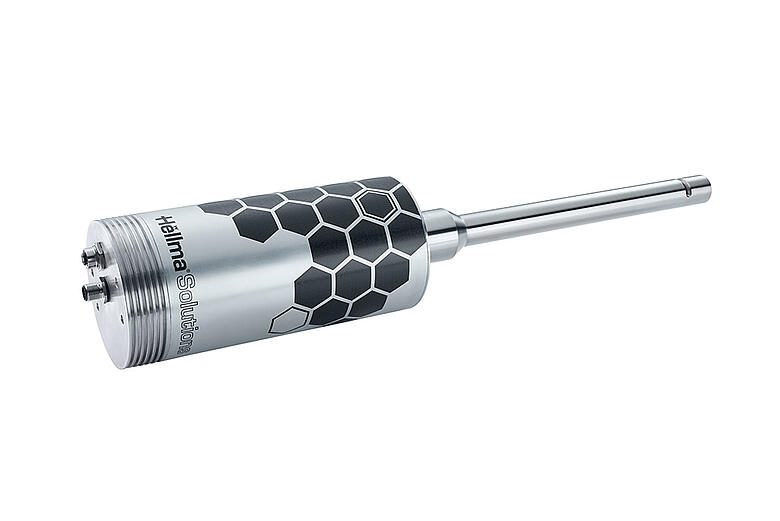
Müllheim, May 2011 The development of pharmaceutical ingredients requires extensive testing and evaluation. One crucial parameter is the exact determination of the cloud point, the temperature at which the ingredient starts to crystallize. In most cases, the cloud point occurs very abruptly, making this determination difficult. The downside of conventional measurement procedures is that an exact process monitoring cannot be performed in real time. This however can be solved through the use of a special mini process probe from Hellma Analytics that monitors the process online in combination with a spectrophotometer. Even as the first crystal forms there is a significant change of the absorption spectra making an exact determination of the cloud point guaranteed.
The mini process probe has removable light path tips with anti-twist protection, thus 100% reproducibility of the results is ensured. Handy dimensions as well as high-quality sealing components make this probe a robust and flexible solution.
This mini process probe has FSMA connections and is available with either UV or NIR optical fibres. A modular construction system enables the adaption to various customer requests, e.g. the optical measuring component can be produced from quartz or sapphire and different lengths are available.

Download Image (6.54 MB)
back

2011-02-02 Hellma Analytics has emerged stronger from the crisis

2011-02-02 Hellma Analytics has emerged stronger from the crisis

Hellma Materials Quality assurance at Hellma Materials in Jena

The economic crisis didn’t mean losses for every company. Hellma Analytics was able to position itself better on the market and in 2010 increased its turnover by even 5% compared to the record year 2008. In the middle of this difficult time, Hellma Analytics took over Schott Lithotec’s Calcium fluoride production in Jena, which the parent company Schott sold. The name has been changed to Hellma Materials and by now it is in the black again and more employees are being hired. Worldwide expansion is being pushed ahead actively and supported by the headquarters in Müllheim.

“We’ve taken this time of crisis consequently to position ourselves more broadly and to systematically improve our processes. In every crisis there is also an opportunity” Lutz Mayer, Managing Director of Hellma Analytics, says. Motivated employees play a major role here. Every company that had to release employees during the crisis notices now how important it is to keep qualified personnel even in less favourable times. Hellma Analytics could avoid terminations due to reduced working hours and flexible personnel. For 2011, it is planned to hire more staff, especially in the technical department.

back

Weitere Informationen: